Welcome to the Unmukts.com – a space for openness, fresh perspectives, and fearless thoughts on current affairs.
In a world full of noise and rushed opinions, Unmukts stands for clarity, understanding, and honest dialogue. This blog is provide a space where one can share reflections on the events shaping our lives – nationally and internationally – through the lens of open discussion and exchange of thought.
We believe that information is everywhere, but openness — to ideas, to change, to truth — is rare. Through Unmukts.com, I want to create a place where ideas flow freely, where questions are encouraged, and where different viewpoints can be explored with respect and depth.
Here, you’ll find:
Insightful takes on national and international affairs
Opinion pieces rooted in independent thinking
Deep dives into politics, economy, and society
Reflections that go beyond headlines
Peace is not about the absence of noise in the world; it is about the absence of noise within yourself. It comes when your values, actions, and purpose stand together in harmony.
What brings you peace?
Many believe peace is found in quiet places, a mountain retreat, a calm beach, a silent room. Yet the world will always have its noise: the rush of deadlines, the clash of opinions, the hum of everyday life. Real peace is not about escaping it.
True peace is the absence of noise within yourself. It is the calm that comes when your values, actions, and purpose move in harmony. When you know what you stand for, when your actions reflect your beliefs, and when your life serves a deeper purpose, the noise outside cannot disturb the stillness inside.
Peace is not a passive state. It requires clarity to see the truth, courage to stand by it, and discipline to live by it. Challenges will come, and storms will test your resolve, but when your inner compass is steady, you will not lose your way.
The world may never be silent, but your heart can be. And in that silence lies the strength to act with wisdom, compassion, and purpose.
Peace is not found in a silent world but in a silent heart.
Peace is not found in a silent world but in a silent heart, where values, actions, and purpose move in perfect harmony.
A mother gives life to a child, a teacher gives life to the future.
Some births happen in silence. Others happen in light. And every human being experiences both.
The first birth is from the mother’s womb, a place of warmth, safety, and unseen love. Here, a tiny heartbeat grows strong, shielded from the noise and storms of the world. The mother nourishes her child with her own strength, carrying a life she has not yet seen but already knows better than herself. This is the birth of the body, the moment we enter the world breathing, crying, and alive.
The second birth is from the teacher’s womb, not of flesh and blood, but of patience, knowledge, and faith. This womb exists in classrooms, in quiet moments of encouragement, in the spark of curiosity ignited by a question. Here, the mind is fed with ideas, shielded from the shadows of ignorance, and guided toward the light of understanding. This is the birth of purpose, the awakening of our ability to think, choose, and shape our own path.
A mother gives us existence. A teacher gives that existence meaning.
A mother holds life in her womb, cradling it in love, guarding it from harm, and feeding it with her own strength. A teacher holds the light of knowledge in their soul, offering it to young minds, protecting them from darkness, and feeding them with wisdom. A mother gives the world a child; a teacher gives the world a future.
Without mothers, there would be no humanity. Without teachers, there would be no civilization. One gifts us a heartbeat. The other teaches us what to do with it.
We are all born twice: once into life, and once into purpose. To honor only the first is to live half a life. To honor both is to understand who we truly are.
So cherish the two wombs that shape us — for in their care lies the story of every life, and the future of all humanity.
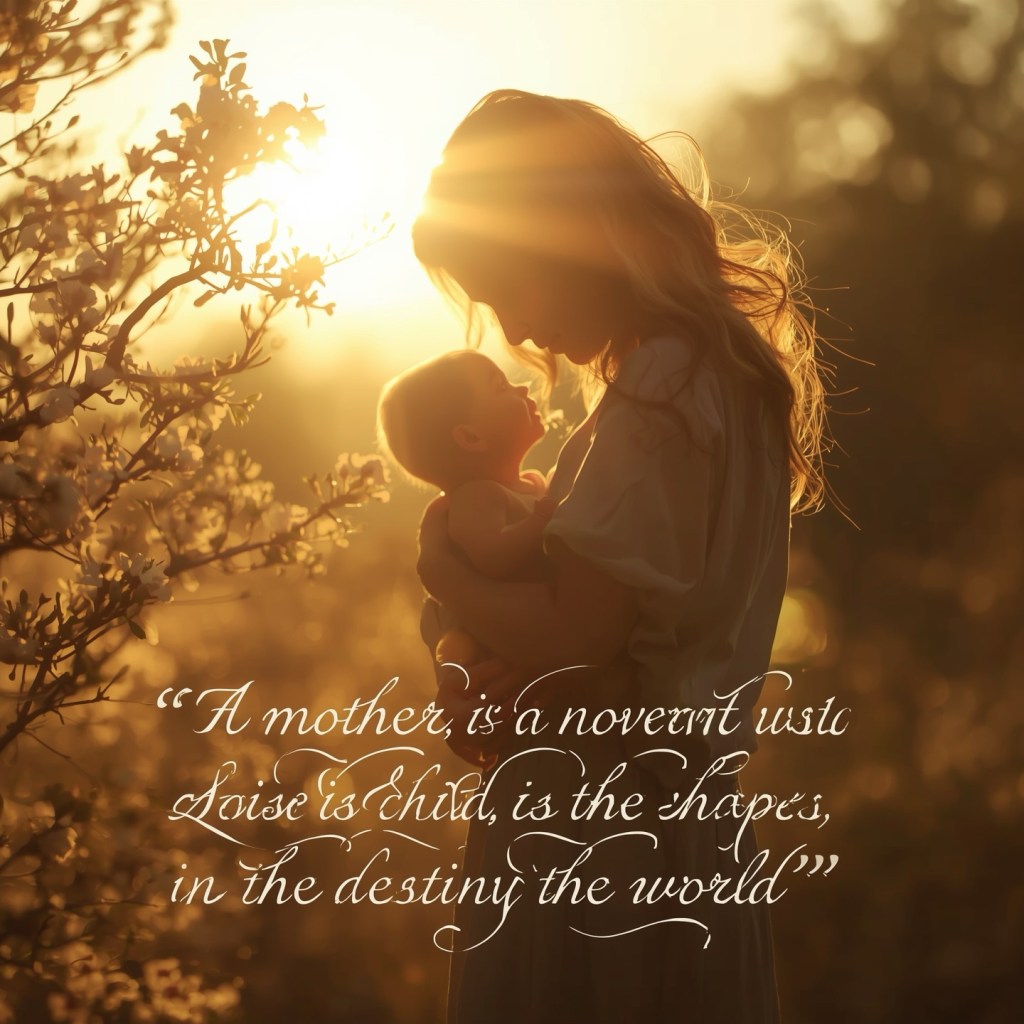
A mother does not just raise a child, she shapes the destiny of the world.
What profession do you admire most and why?
She holds a world within her arms
Molding clay of innocence into shapes of destiny
In her whispers a child learns truth
In her gaze they see their first mirror of the soul
She can raise a Ram whose life is a song of virtue
A Krishna whose wisdom dances with joy
Or a Ravana whose brilliance burns with pride
No crown rests on her head
No throne marks her seat
Yet kingdoms rise and fall from the lessons she gives
For in her care lies the seed of the world to come
In today’s world we often measure professions by salaries, titles or influence. Yet there exists one role that is timeless and immeasurable which shapes the very destiny of humanity — motherhood.
A mother is not just a caretaker. She is a creator of character, the first and most enduring teacher of values, the architect of her child’s moral foundation. In her hands rests the ability to mold a human being who could become a Maryada Purushottam Shri Ram, the embodiment of righteousness, compassion and duty; or a Shri Krishna, unmatched in wisdom, charm and strategic brilliance; or even a Ravana, a man of great intellect but consumed by arrogance and cruelty.
The First School of Life
Long before a child steps into a classroom they learn from their mother. Her words, her actions and her way of facing challenges silently etch lessons into the child’s mind. A mother’s lullabies carry more than comfort; they carry the seeds of culture, faith and morality. Her stories are not just tales but life’s first moral compass.
The Responsibility of Shaping Destiny
This is why motherhood is more than love, it is responsibility. The way a mother responds to a child’s mistakes teaches them accountability. The way she handles adversity teaches resilience. Her ability to guide without crushing curiosity, to discipline without breaking spirit and to love without spoiling shapes the person her child will become.
The Unpaid, Unseen, Unending Job
Motherhood has no official working hours, no retirement and no salary. It demands sacrifices that often go unseen — personal dreams postponed, sleep traded for care, comfort surrendered for a child’s needs. Yet every invention, every work of art, every act of heroism or villainy in human history traces back in part to the upbringing that person received.
A Profession that Shapes the World
We speak of leaders, innovators and thinkers shaping the future. But before they were any of those things, they were children in the care of someone who taught them how to think, act and live. In that sense every mother holds in her hands not just the future of her child but the future of the world.
It is time we stop treating motherhood as an invisible duty and start recognizing it as the most profound profession where the work is nothing less than shaping the soul of the next generation.
The Unmukt Society Foundation is not a typical shop. It is a space where every visitor is more than a customer — they are part of a community that values dignity, warmth, and courage.
When you step inside, you will not just see shelves. You will see handwoven shawls made with care, journals waiting to hold your thoughts, and jars filled with words of encouragement for days when life feels heavy.
Here, the mirrors do not reflect flaws. They reflect the strength it takes to face the world, even on the most challenging days.
You will find a quiet corner to pause, breathe, and remember that your story matters. You will meet someone at the counter who does not just process a transaction, but asks with sincerity, How are you really doing? and waits for your answer.
We believe every woman deserves a space where she can rest her soul, feel understood, and leave a little lighter than she arrived.
At Unmukt Society Foundation, you are not just buying something to take home. You are taking with you a reminder — you are seen, you are valued, and you are enough.
Come visit. Share your story. Let’s create a world where every heart feels at home.
Every time we step out of the house, we do the same quick check: phone, wallet, keys. These are the things we think we can’t live without. But there’s something far more valuable something weightless, priceless, and irreplaceable — that we should carry everywhere, every day.
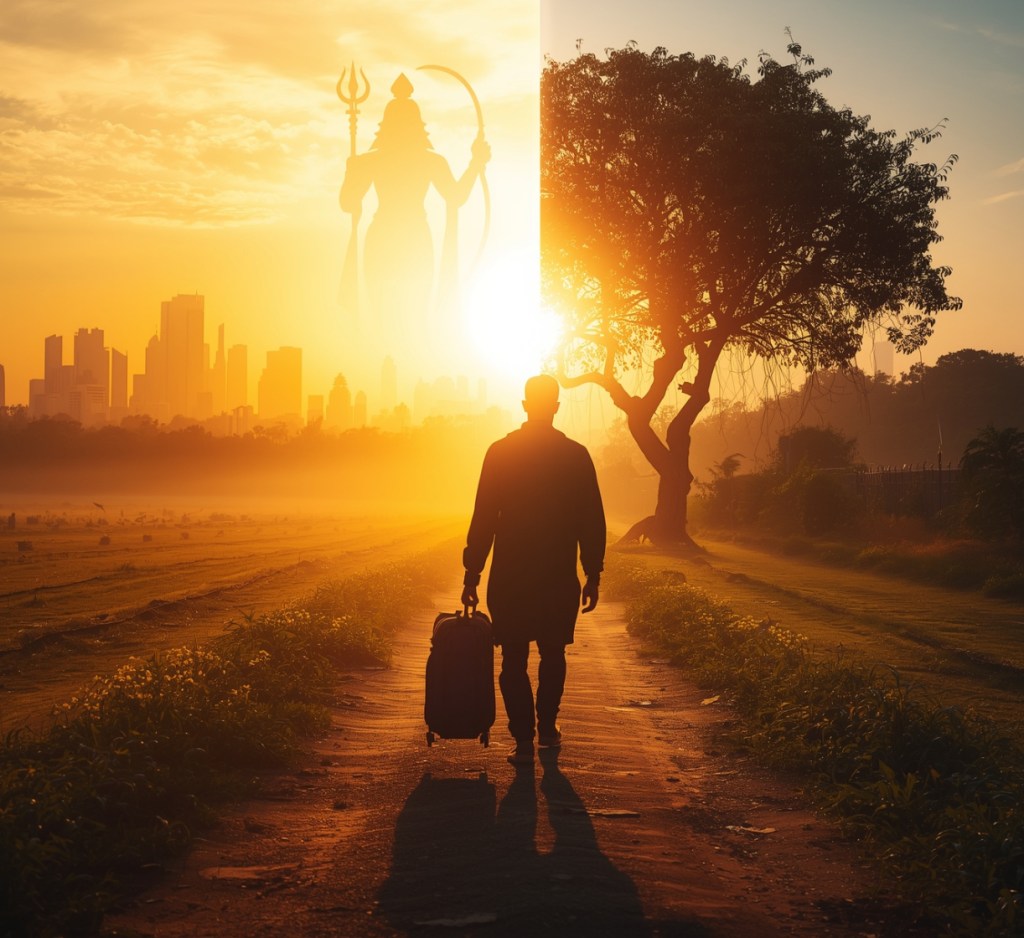
That thing is Dharma.
Dharma is Not Religion
Many people search “what is dharma” and confuse it with religion thinking it means being Hindu, Muslim, Christian, or Buddhist. But religions are belief systems, traditions, and rituals passed down through communities.
Dharma is different.
Dharma is what you truly believe. It is your thought process, your intentions, your emotions, your sense of fairness, and the wisdom you have gathered through life. It’s not about the label you wear it’s about the truth you live by.
The Meaning of Dharma
In its purest form, dharma is the principle that holds life, society, and the universe in balance. It is:
Belief – The values you hold at your core.
Intention – The purpose behind your actions.
Thought process – How you see, judge, and respond to the world.
Wisdom – The lessons learned from experience and reflection.
Krishna’s Teaching on Dharma:
In the Mahabharata, Krishna tells Arjuna that fulfilling one’s own dharma with integrity is better than following someone else’s path, even if that path seems easier. In essence: your dharma is your truth, your responsibility, and your way of keeping the world in harmony through your actions.
Dharma in Modern Life
Today, dharma isn’t about following a rigid ancient rulebook. Life is faster, messier, and full of grey areas. Modern-day dharma means carrying your principles into every choice you make:
Integrity in action – Choosing honesty in business, relationships, and daily life, even when no one is watching.
Responsibility in roles – Fulfilling your duties as a parent, friend, leader, or citizen with sincerity.
Fairness in judgment – Standing against injustice and bias, even when it’s uncomfortable.
Harmony in living – Respecting others, nature, and the shared spaces we all depend on.
Why Dharma Matters More Than Anything Else You Carry
Your phone can be lost. Your wallet can be stolen. Your keys can be replaced. But dharma, once abandoned, is far harder to recover.
When you carry dharma with you, you carry an inner anchor — something that keeps you steady in chaos, helps you choose well in uncertainty, and allows you to look back without regret.
A Simple Habit to Carry Dharma Daily Before you step out each day, check Dharma along with all other physical belongings because in the end, everything you own is temporary. But the way you live, guided by your beliefs, thoughts, and wisdom, is what leaves your true mark on the world.
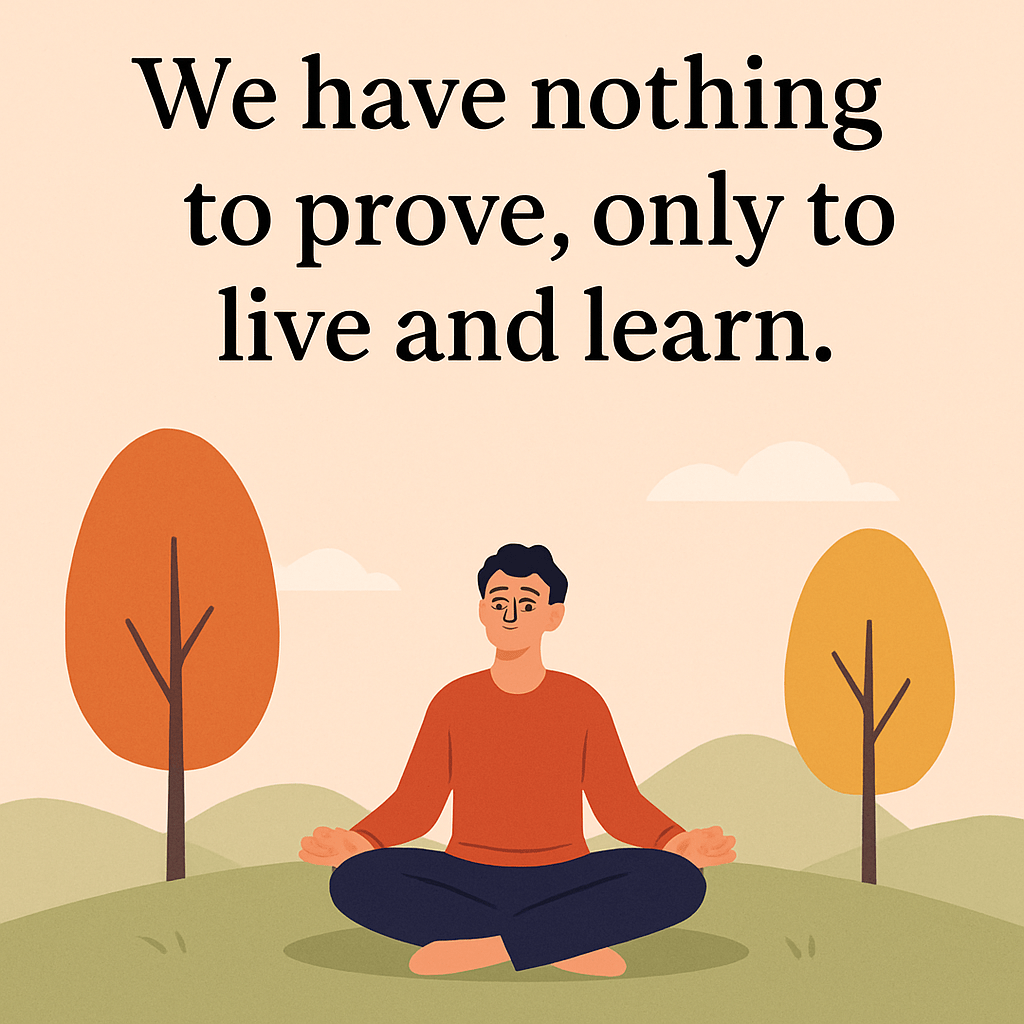
I want my blog to inspire a shift in the way people live. We should stop the exhausting race of proving ourselves. Life can be lived with peace, wisdom, and awareness. We have nothing to prove to anyone. Life is a short journey, and one day we will all have to leave. What truly matters is not titles, possessions, or applause, but the knowledge that comes from observing life, understanding the laws of nature, and learning lessons beyond any book.
This knowledge is not the kind we learn in school or read in textbooks. It is the wisdom that comes from seeing how everything in nature is connected and from learning to live without stress. I want people to slow down, relax, and enjoy the journey.
I also believe no one should walk through life alone. If you need make friends, they will help you, just as you should be there for them. If you don’t have friends unmuktgp@gmail.com will help you.
If my blog help even one person let go of worries, find peace, and live with more joy, that is enough for me. Change does not have to be big to matter. Even a small change in the way someone thinks or feels can make their whole life better.
What if we weren’t just born into a world designed by history, politics, and profit—but into a universe shaped by compassion, love, and universal responsibility? What if the measure of success wasn’t how much you owned, but how gently you walked the Earth?
In an alternate universe, I live a different life.
A World Guided by Love and Care
In this world, I don’t wake up to the noise of news cycles, GDP forecasts, or the fear of falling behind. I wake up to the hum of nature, the gentle whispers of trees, and the subtle heartbeat of a world in balance. Here, love is not a luxury; it’s a language.
Every creature, human or not, is seen as sacred. Animals are not consumed, but respected. Trees are not cut, but conversed with. Rivers are not poisoned, but sung to. No one needs to fight for space, because all space is shared with the understanding that Earth doesn’t belong to us—we belong to Earth.
Integrity as the Foundation of Society
There are no politics of power here, only policies of purpose. Leaders aren’t chosen for their strength to dominate, but for their strength to serve. Promises are not election bait but sacred vows. Integrity isn’t a value, it’s a default.
People don’t lie here, not because it’s forbidden, but because the truth is celebrated like art. Every interaction is transparent. Agreements are honored, not enforced. Trust is not earned—it is extended.
A Civilization of Affection and Connection
Technology exists, yes—but not to isolate. It’s designed to enhance empathy, deepen understanding, and make life kinder. Artificial Intelligence supports real intelligence of the heart. Algorithms connect people to needs, not noise.
People hug more than they argue. They ask more than they assume. They listen more than they speak. Children grow up not fearing failure, but celebrating curiosity. Elders are not forgotten, but cherished as libraries of lived wisdom.
Humanity Beyond Borders and Species
In this universe, there are no countries, only communities. No religions, only reverence. No “others”, only “us.”
We don’t save the planet to save ourselves. We save it because it is home to all who feel. Birds, bears, bees, and banyan trees—all protected, not as resources, but as relatives.
War is history. Weapons are exhibits in museums titled “How We Used to Hurt.” Peace isn’t negotiated—it’s lived.
Why This Life Matters—Even If It’s Alternate
You might ask, Why dream of such a life? Because in dreaming, we begin to believe. And in belief, we begin to build.
The world may not be this way yet. But every kind act, every honest word, every gentle decision brings us one inch closer to that alternate reality, until it is no longer alternate, but ours.
And so, in this world or the next, I live for love, lead with care, walk with integrity, and carry the hope that we all, humans and non-humans alike, can share this one miraculous life, together.
Because maybe, just maybe, the alternate universe we long for… is the one we are slowly creating.
The Tariff Irony: When the West Buys from Russia, But Blames India
As the world continues to grapple with geopolitical realignments, a fresh chapter unfolds in the dynamic relationship between India and the United States. The latest spark? Allegations from the American leadership that India is profiting from oil trade with Russia, followed by threats of raising tariffs on Indian goods. This move, loaded with irony, demands a closer look—particularly when seen through the lens of trade hypocrisy and strategic necessity.
India’s Energy Trade: A Compulsion, Not a Choice
India’s engagement with Russian oil is not about opportunism—it is about survival. As a rapidly developing economy with over 1.4 billion people, India requires affordable and predictable energy supplies to maintain domestic stability and growth. When the Ukraine conflict disrupted global supply chains, Indian policymakers acted pragmatically. Russian crude, discounted due to sanctions and shifting alliances, offered India an economic lifeline in turbulent times.
This was never a hidden arrangement. In fact, during the early stages of the conflict, the West—including the United States—was not only aware of India’s energy needs but subtly encouraged such purchases to maintain global oil market stability. Today, however, that very pragmatism is being spun as profiteering.
The Double Standards of the West
While fingers point at India, the truth lies in plain sight. The same nations leading the charge of criticism maintain their own trade relationships with Russia—sometimes even more lucratively.
European Union’s trade with Russia in 2024 exceeded €67 billion in goods, not including €17 billion in services.
Imports of liquefied natural gas (LNG) by Europe reached record highs—16.5 million tonnes, a clear indication of demand, not disapproval.
The U.S. itself continues to purchase uranium for nuclear power, palladium for electric vehicles, and essential fertilizers and chemicals from Russia.
So when a democratic, transparent country like India is singled out for similar trade behavior, the credibility of the criticism weakens. What India pursues as a necessity, the West continues as convenience.
Strategic Sovereignty Over Global Pressure
India’s foreign policy has long been grounded in strategic autonomy. Whether during the Cold War or amidst the current multipolar world, New Delhi has resisted being pulled into power blocs. Its relationship with Moscow is decades old, based on defense cooperation, energy needs, and historical trust. That legacy cannot be undone by Western discomfort.
India has also increased trade with the U.S., engaging deeply in defense, technology, space, and pharmaceuticals. But friendship should not demand forfeiture of sovereignty. True partnership thrives on respect, not coercion.
Tariffs as Tools of Intimidation?
Threats of economic retaliation via tariffs reflect a growing trend where diplomacy takes a back seat to populism. Tariffs hurt both sides—raising costs for American consumers, straining global supply chains, and souring bilateral ties. When used against allies, they not only appear unjustified but also counterproductive.
India’s growing GDP, crossing 7% annually, stands in stark contrast to the stagnating 1.25% growth in the U.S. If tariffs are meant to contain India’s rise, they will fail. India has diversified trade, built resilient institutions, and formed new partnerships across Asia, Africa, and Latin America.
Conclusion: A Test of Maturity in Global Leadership
This moment is not just about oil or tariffs. It is a test of whether global leadership can rise above selective outrage and rediscover the value of balanced diplomacy.
India is not asking for favors. It is demanding fairness. In a world divided by wars and shifting alliances, it chooses to walk a sovereign path, balancing principle with pragmatism.
Instead of punishment, the West should seek partnership. Instead of blame, it should pursue dialogue. Because in today’s interconnected world, targeting India doesn’t just hurt India—it chips away at the very global stability the West claims to protect.
The Only Fool in the Room: A Voice for the Quietly Wise
They say wisdom speaks in silence. But in today’s world, silence is foolishness, and noise is the new knowledge.
Everywhere I look, there are experts — in war, economics, spirituality, parenting, medicine, poetry, even silence itself. Their confidence is intoxicating. Their certainty, unshakable. Their facts, flexible.
And then… there’s me.
I sit with questions. I carry doubt like a pilgrim carries prayer — not because I lack answers, but because I respect the weight of knowing. I watch people enter rooms not to understand but to dominate. To sprinkle their unseasoned opinions on every dish, regardless of the recipe. To interfere not out of care, but out of a compulsive need to be seen as knowing — as important.
They speak in conferences and corner talks. In group chats and governance. With swollen certainty and brittle understanding. Every matter is their matter. Every issue, their battlefield. Every silence, their cue to speak.
But me? I listen. I listen so carefully that even silence tells me a story. I don’t jump into every pond just to make a splash. I wait. I watch. I choose the river that flows toward meaning.
You call that foolishness?
Then yes, I am the only fool in the room.
Because I believe wisdom is not in knowing everything. It’s in knowing when not to speak, when not to interfere, when not to impose your voice on a world already full of noise.
So to all the experts of everything — carry on. Let the world marvel at your volume.
And let me stay in my quiet corner — learning, creating, questioning — foolishly.
Today’s question asks, “What’s the most money you’ve ever spent on a meal? Was it worth it?”
But I want to ask something else: Is food really about money? Or about the necessity of survival?
Food is the most basic necessity of life. It gives us strength, keeps us alive, and reminds us that we are all human. Rich or poor, king or commoner, we all need food to survive. And yet, in today’s world, it has become a symbol of status more than survival.
Some people spend thousands on a single meal, exotic dishes, decorated plates, and fine dining under golden lights. They post pictures, praise the chef, and call it “an experience.” For them, it’s a luxury. But for millions, it’s still a dream.
They sleep hungry — not because there’s no food in the world, but because the food is not equally shared. Because for some, food is fashion. For others, it’s life — and life is being lost every day due to an empty plate.
Yes, you can spend money on what you love. You worked for it, and that’s your right. But let’s not forget the other side. Let’s not forget that while we waste, others wait.
So was the most expensive meal “worth it”? Maybe the real worth of a meal lies not in its price — but in how it makes you feel.
Does it make you grateful? Does it remind you of someone who’s hungry tonight? Does it inspire you to share a little, waste a little less?
Because that — that awareness — makes any meal truly priceless.














 unmukts.com